
Energy Saving Mode
This screen reduces the screen power consumption when you are not active on our site.To resume navigation, move the mouse or press a point on the screen.
This site uses technical cookies necessary for its operation and analytical cookies, including third-party anonymised cookies, to carry out aggregate statistical analysis. By closing the banner you consent to the processing of your personal data through the categories of cookies mentioned.
For more information about the cookies in operation on the site you can consult our Cookie Policy.
Close
Cookie PolicyMECHANICAL VALVES FAMILY
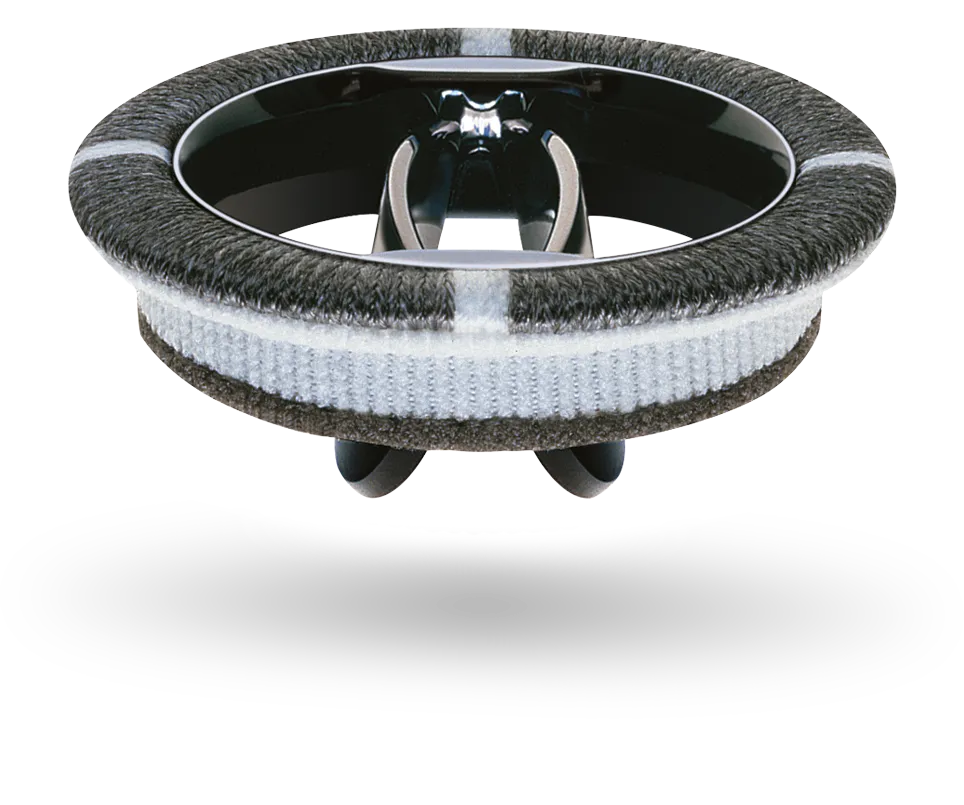
Featuring many distinguished details, Bicarbon valves provide favorable hemodynamic performance1,2 combined with proven safety and durability*
The benefits of its innovative and distinguished design are reflected in the desirable clinical outcomes**4,5 reported in scientific literature across over 25 years of clinical use
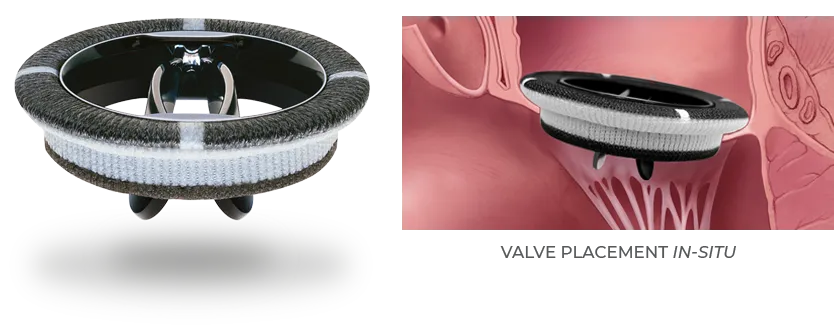
Bicarbon’s distinguished details make the difference when it comes to hemodynamic performance.1,6
Bicarbon is a unique valve featuring a Titanium housing coated with CarbofilmTM.
Titanium is a highly biocompatible material with greater structural stability than the commonly used Pyrolite Carbon. This allows for a slimmer housing, increasing the area available for blood flow.7
The CORCYM proprietary Carbofilm coating is applied to both the valve’s Titanium housing and the sewing cuff. The coating favors hemocompatibility, minimizing the risk for pannus formation* and favoring a gentle tissue ingrowth.7,8
*CORCYM post-market surveillance classifies the incidence of valve-related pannus formation P as improbable (10 -6 < P ≤ 10-5).

Bicarbon is a unique mechanical heart valve featuring curved leaflets specifically engineered to achieve an even flow distribution downstream.7 This leads to several benefits to the Patient:6,7
Low turbulence which prevents blood stasis and thus the risk for thrombus formation.
Low pressure gradients for favorable hemodynamic performance.
Reduced energy loss for an efficient functioning and beneficial cardiac workload.
Bicarbon valves are specifically designed to minimize thrombogenicity:10,11
Carbofilm coating increases hemocompatibility lowering the risk of thrombus formation.7,8*
Curved leaflets, aerofoil housing profile, optimized leaflets travel arc and opening angle favor a laminar blood flow which reduces shear stress and hemolysis.7
A low degree of hemolysis leads to less platelet activation and consequently less risk of clots.12
The unique two-open-chimney design ensures an effective passive washing of the hinges avoiding blood stasis and hemolysis at the same time.7,13
The Bicarbon design was carefully engineered to last over time.*
The Titanium housing, with greater structural stability than solid Pyrolytic Carbon housings, ensures correct leaflet functionality.7
The unique two-open-chimney design of the hinges avoid blood stasis and hemolysis minimizing the risk of structural valve failure and clinical complications.7, 13
The Carbofilm coated PET fabric sewing ring provides a safe anchorage favoring a gentle tissue ingrowth that minimizes pannus formation.**
The unique two-open-chimney design ensures an effective passive washing of the hinges avoiding blood stasis and hemolysis at the same time.7,13
© 2024 Corcym Group. All rights reserved.
Designed and developed by Kaffeina.it


